
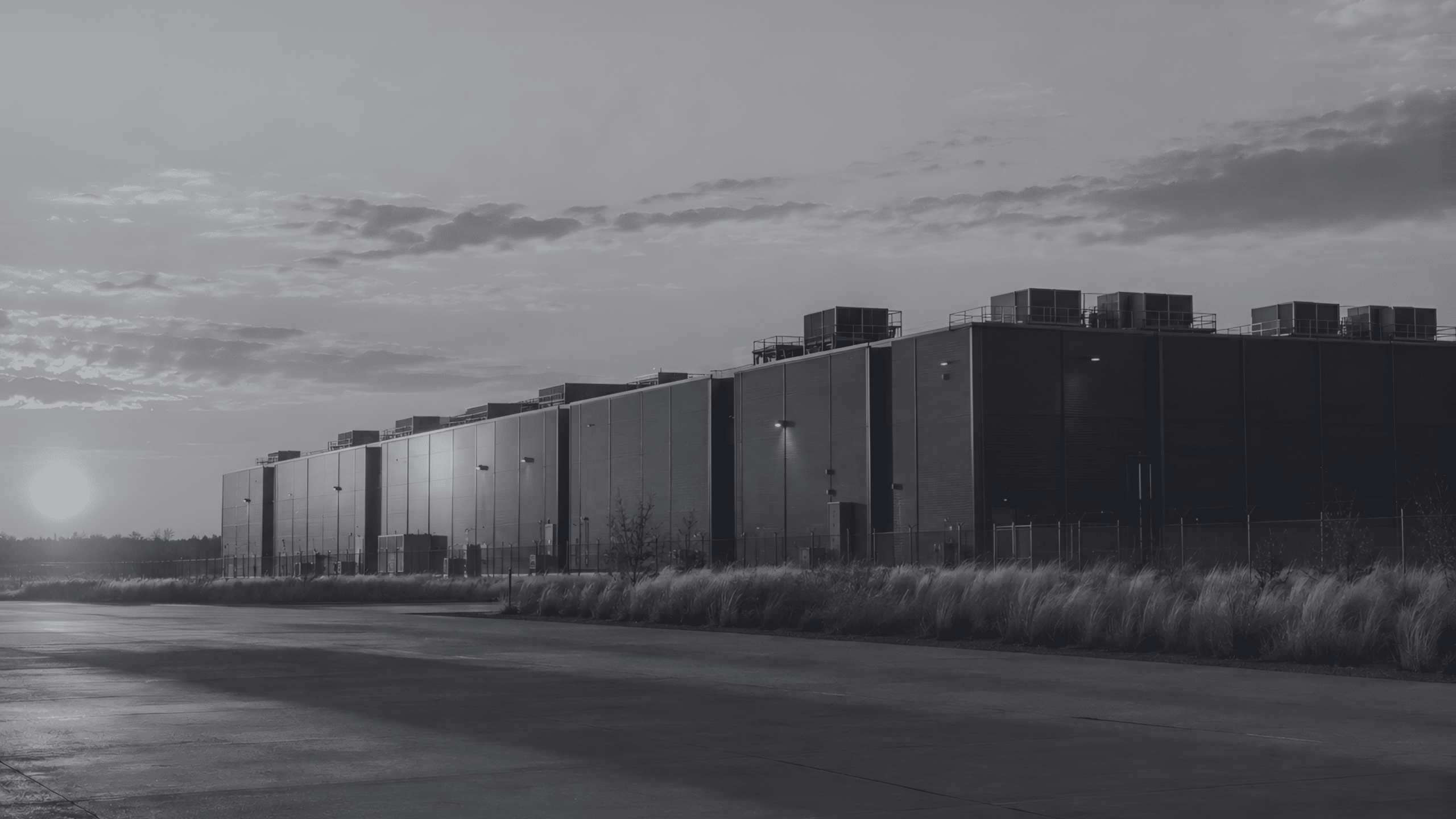
Wyoming and Colorado are courting the same hyper-scale projects with opposite instincts. Employers on both sides of the state line will feel it in hiring, pay, contracting, and compliance long before the first rack goes live.
Most coverage of the AI infrastructure build treats it as an energy story or a land use story. It is also a labor story, and a large one. U.S. data center electricity demand is projected to grow sharply by the end of the decade. Every one of those megawatts arrives with a construction crew, an operations team, a set of contractors, and a permit file full of commitments that someone in HR eventually has to keep.
Along the Front Range and up Interstate 25 into Cheyenne, two states are competing for the same projects with very different rulebooks. The differences matter to any employer in the region, not just to the companies building the facilities.
Wyoming: speed as a strategy
Wyoming’s pitch is low-cost power, a sales and use tax exemption for qualifying data center equipment that has been on the books for well over a decade, and a permitting posture built to say yes. Large industrial projects in the state generally pass through the Industrial Development Information and Siting Act, which applies to facilities with estimated construction costs above a threshold the Industrial Siting Council adjusts periodically against construction cost indices. That threshold is high, but large data centers can easily exceed it.
The Siting Act process requires a socioeconomic and environmental analysis, coordination with state agencies, and impact assistance payments to affected local governments. It also takes time. Some projects may qualify for exemptions from the full council certification process by locating in designated industrial or business parks, while still being subject to certain information filing requirements. That exemption has become a live political question, and expect it to remain one.
The 2026 legislative session produced no comprehensive data center-specific statute. What did arrive was Executive Order 2026-03, signed in June, which directs state agencies to coordinate on proposed projects, improve regulatory efficiency, and, notably for this audience, strengthen workforce readiness. The potential economic benefits explain why the state’s interest in attracting these projects is unlikely to soften.
Colorado: conditions as a strategy
Colorado wants the investment too, but on terms. Xcel Energy filed a proposed large-load tariff addressing the infrastructure costs and financial risks associated with major electricity customers. The proposal reflects a central question for utilities and regulators: who pays for the infrastructure needed to serve facilities with enormous power demands?
At the General Assembly, Senate Bill 26-102 proposed a comprehensive framework for large-load data centers, including energy sourcing and other accountability requirements. House Bill 26-1030 would have created a Data Center Development Authority and an incentive program with workforce, energy, and consumer protection provisions. Both bills were postponed indefinitely (meaning they did not pass) in May 2026. The direction of the debate is clear regardless: Colorado lawmakers are examining what conditions should accompany large data center projects, including their effects on communities, utilities, and workers.
Three power models, three employment structures
Developers are pursuing three broad approaches to electricity. The first is conventional utility service, where the local utility builds and operates generation and the data center is a very large retail customer. The second is on-site or behind-the-meter generation, where the developer builds its own power, often gas-fired, and operates largely independent of the grid. The third is third-party generation, where an independent power producer builds dedicated capacity and sells it to the facility under contract.
General counsel and HR leaders should read that list as three different answers to the question of who employs whom. Under the utility model, the generation workforce belongs to a regulated utility with its own collective bargaining agreements, where applicable, and its own compliance culture. Under the self-generation model, the developer may become an energy employer overnight, with the safety, licensing, and environmental compliance obligations that follow. Under the third-party model, a facility may host three or four separate employers on one fenced site, which puts multi-employer worksite doctrine, potential joint-employer exposure, and indemnity drafting squarely on the table. Put simply, when several companies share one site, a clear contract decides who is responsible when something goes wrong.The power model is chosen by engineers and finance. The employment consequences land elsewhere.
What this means for employers who are not building data centers
The most immediate effect is competition for skilled trades. Hyper-scale construction absorbs electricians, HVAC technicians, pipe-fitters, and controls specialists at wage rates that regional employers cannot easily match. Any company in northern Colorado or southeastern Wyoming that depends on those trades, from manufacturers to hospital systems to school districts, should plan for turnover and for pressure on internal pay equity when it counteroffers.
That competition runs directly into two very different restrictive covenant regimes. Colorado’s noncompete statute limits enforceable noncompetes to qualifying highly compensated workers, requires separate written notice, and imposes penalties for noncompliant agreements. Wyoming’s 2025 statute voids most noncompetes entered into on or after July 1, 2025, with specified exceptions involving executive and management personnel, trade secret protection, business sales, and certain training and relocation expenses. An employer that has been relying on a template noncompete to hold onto its electrical crew should not assume it will hold up. Have a lawyer review those agreements before you need to enforce them and to ensure you have accurate expectations for potential noncompete agreements.
Pay transparency creates a second fault line. Colorado’s Equal Pay for Equal Work Act requires compensation disclosures in covered job postings and notices of certain job opportunities. Wyoming imposes no comparable statewide requirement. A regional employer posting a single job that could sit in Fort Collins or Cheyenne needs to decide which rule governs the posting, and the safer answer is usually the Colorado one. Layer on Colorado’s paid family and medical leave program, its paid sick leave statute, and the POWR Act’s harassment standard, and the gap between a compliant Colorado handbook and a compliant Wyoming handbook is wide enough that one document rarely serves both.
Immigration compliance deserves its own mention. Construction workforce surges can bring additional attention to worksite compliance, and general contractors may push I-9 and E-Verify obligations (the forms and system used to confirm a worker can legally work in the U.S.) down to subcontractors by contract. Employers supplying labor to these projects should review their contractual obligations and be certain their own files would survive an audit.
Finally, the siting process itself can generate workforce commitments. Wyoming’s impact assistance framework and Colorado’s legislative proposals raise questions about local hiring, apprenticeship participation, workforce training, and housing. Those commitments may get made in permit hearings or development agreements by teams focused on securing project approval. They get kept, or not, by HR departments that were not in the room.
The AI connection
There is a certain symmetry in the fact that the facilities powering AI hiring tools are being built in a state that regulates AI hiring tools. Colorado’s 2026 automated decision-making technology law, which takes effect January 1, 2027, establishes notice, disclosure, recordkeeping, and human review requirements for covered systems used in consequential decisions, including employment decisions. It replaces the state’s earlier AI law and does not impose the same broad impact assessment framework originally contemplated. Wyoming has no equivalent comprehensive statewide law. Employers evaluating AI screening or scheduling tools for a multi-state workforce should understand which tools and decisions fall within Colorado’s requirements before building their compliance processes.
Three questions worth asking before the next quarterly review
- Which of our trades and technical roles are most exposed to poaching by data center construction, and do our retention tools for those roles actually survive Colorado’s and Wyoming’s noncompete statutes?
- If we supply labor, services, or equipment to a data center site, who is the employer of record for every person we send there, and what does our contract say about joint-employer allocation, safety, and immigration compliance?
- Are our job postings, leave policies, and harassment standards written to the stricter of the two states, or are we running two sets of rules and hoping the wrong one never gets tested?
Where Treaty Oak fits
You don’t have to build a data center to inherit a data center problem. Competition for skilled workers, complicated contractor relationships, and employment laws that change when you cross a state line can create headaches long before anyone notices the connection.
Treaty Oak Employers’ Law Group helps employers sort through those issues before they become bigger ones. If your workforce, policies, or contracts haven’t kept pace with where your business is headed, it may be time for a closer look.